“Can I release a song made with AI?” is one of artists’ most common questions in 2026. Yes, but the rules have changed. Using Yandex Music’s official rules, Suno’s help and Spotify’s announcements, we explain what an AI release requires and why tracks may be taken down.
AI tracks are allowed, with a label
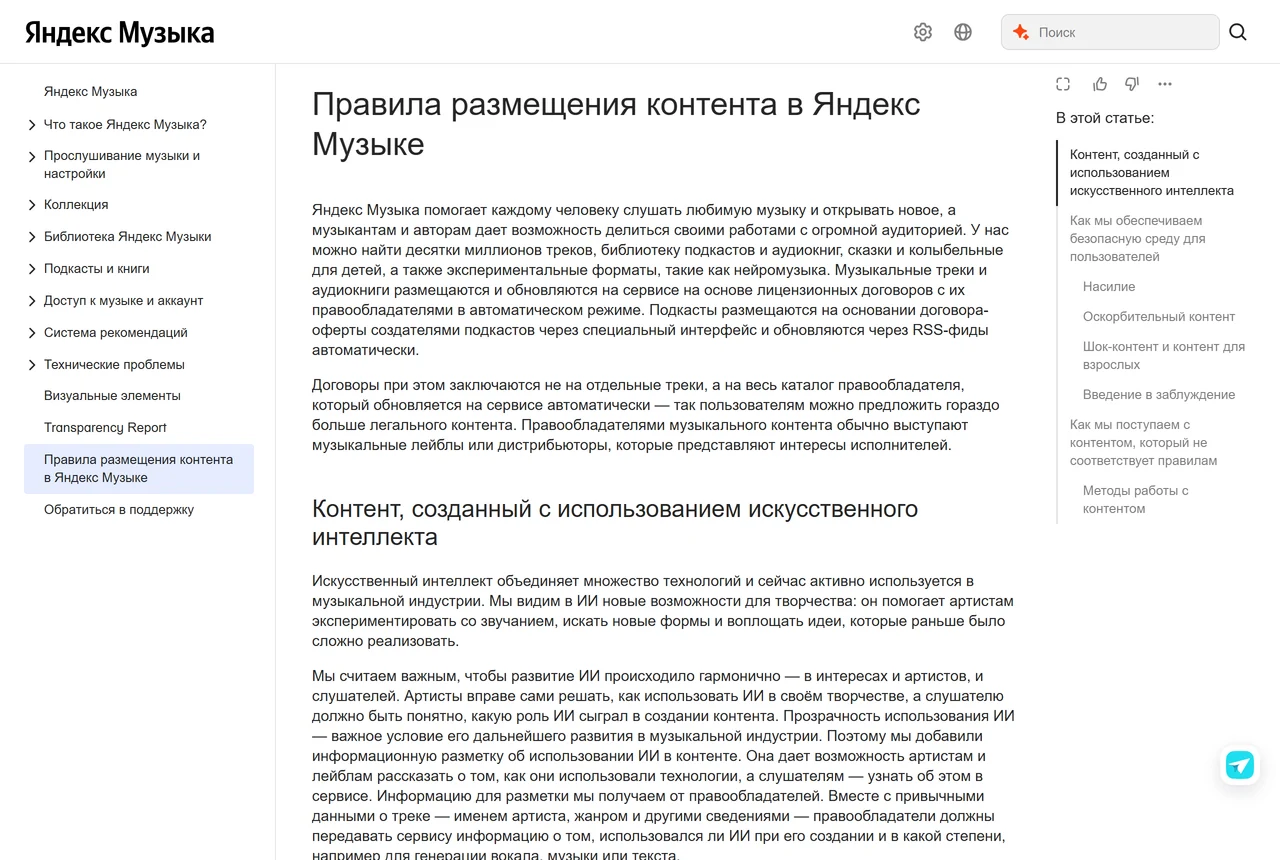
Yandex Music, a major Russian streaming service, does not ban AI-assisted music. Its content rules say artists can decide how to use AI creatively, while listeners should understand AI’s role. Since September 2026, the service has therefore labeled these tracks, and rights holders must disclose AI use when submitting them.
How Yandex Music’s AI labels work
The service receives information about AI’s role from the rights holder, alongside the artist name, genre and other track data. State whether AI was used and to what extent—for example, to generate vocals, music or lyrics.
Yandex Music treats missing, incomplete or inaccurate AI disclosures as a violation of its content rules. An honest label is safer than hoping nobody notices.
Who owns an AI-generated track?
To release an AI track, the rights holder needs commercial rights to the music, voice, cover art and all other release materials. Start with the central question: can you use the track commercially? That depends on the generation service’s terms, not the streaming platform. With Suno, the popular song generator, your plan at the time of creation is what matters.
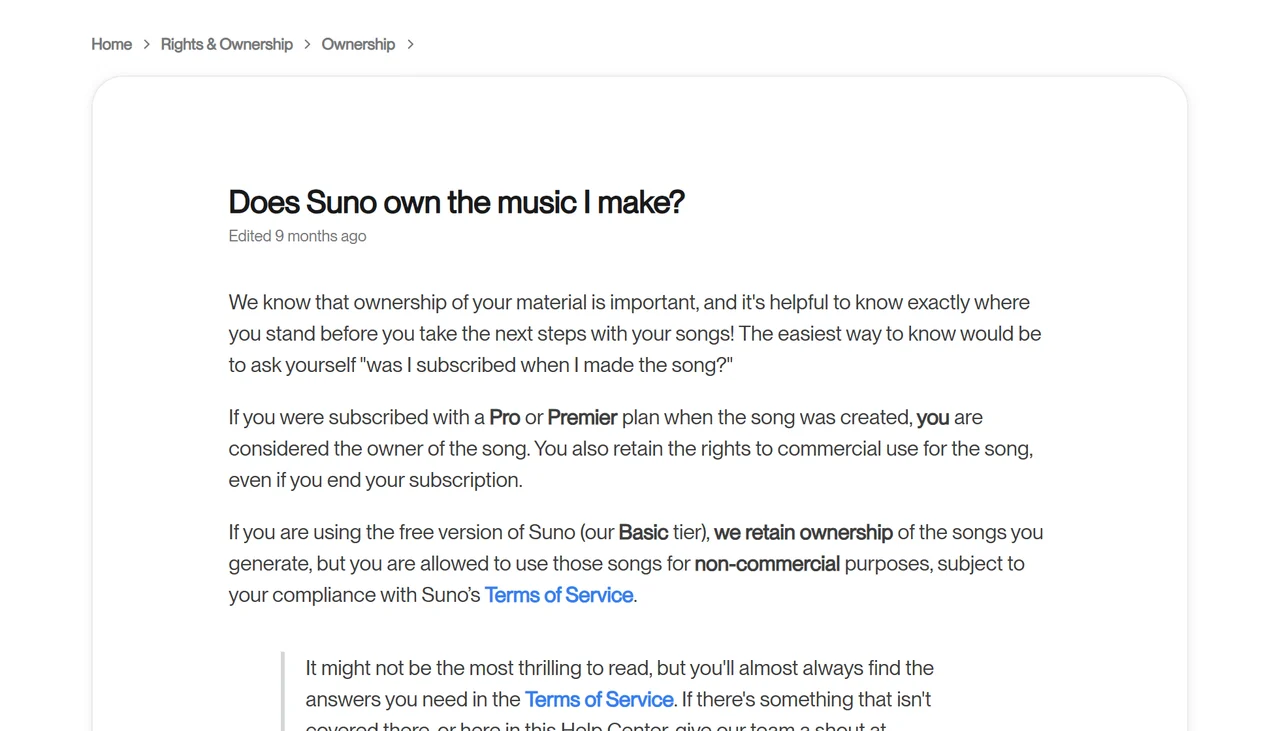
- Suno owns the song
- Noncommercial use only
- Monetized streaming releases aren’t permitted
- Subscribing later does not grant rights retroactively
- You own songs created during the subscription
- Commercial use is allowed
- Rights remain after you cancel the subscription
- Keep proof of the creation date and active plan
There is also a legal distinction. Article 1228 of Russia’s Civil Code recognizes the author as the individual whose creative work produced the result. Your own lyrics, melody, arrangement and mixing are protected as your creative contributions, while the status of fully generated music remains disputed. More of your own work gives your claim a firmer foundation. See our music copyright guide for more.
Why AI tracks get taken down
The issue is deception and spam, rather than AI itself. These Yandex Music rules apply to all tracks, whether or not AI was used:
In the year leading up to September 2025, Spotify removed over 75 million spam tracks and introduced a filter that stops recommending mass uploads, duplicates and artificially short tracks.
How Spotify and other services approach AI
 Disclosure in creditsSpotify supports the DDEX industry standard: AI’s role appears in track credits if the distributor supplies it
 Information, not punishmentSpotify says AI disclosure informs listeners; it is not a reason to downrank a track
 Voice use requires consentVocal imitation is allowed only with the artist’s permission
 The platform decidesEach service reviews releases under its own rules. Nobody can guarantee an AI track’s publication in advance
How to release an AI track honestly, step by step
If you hold the rights and the track is presented honestly, the process follows a conventional release, with a few extra checks:
Our AI song generator comparison explains the available services and their differences. For cover art, see our cover art requirements guide.